Picture a class of 20 students. With truly personalized learning, that's 20 students at 20 different levels, all at the same time. Are we ready for that?
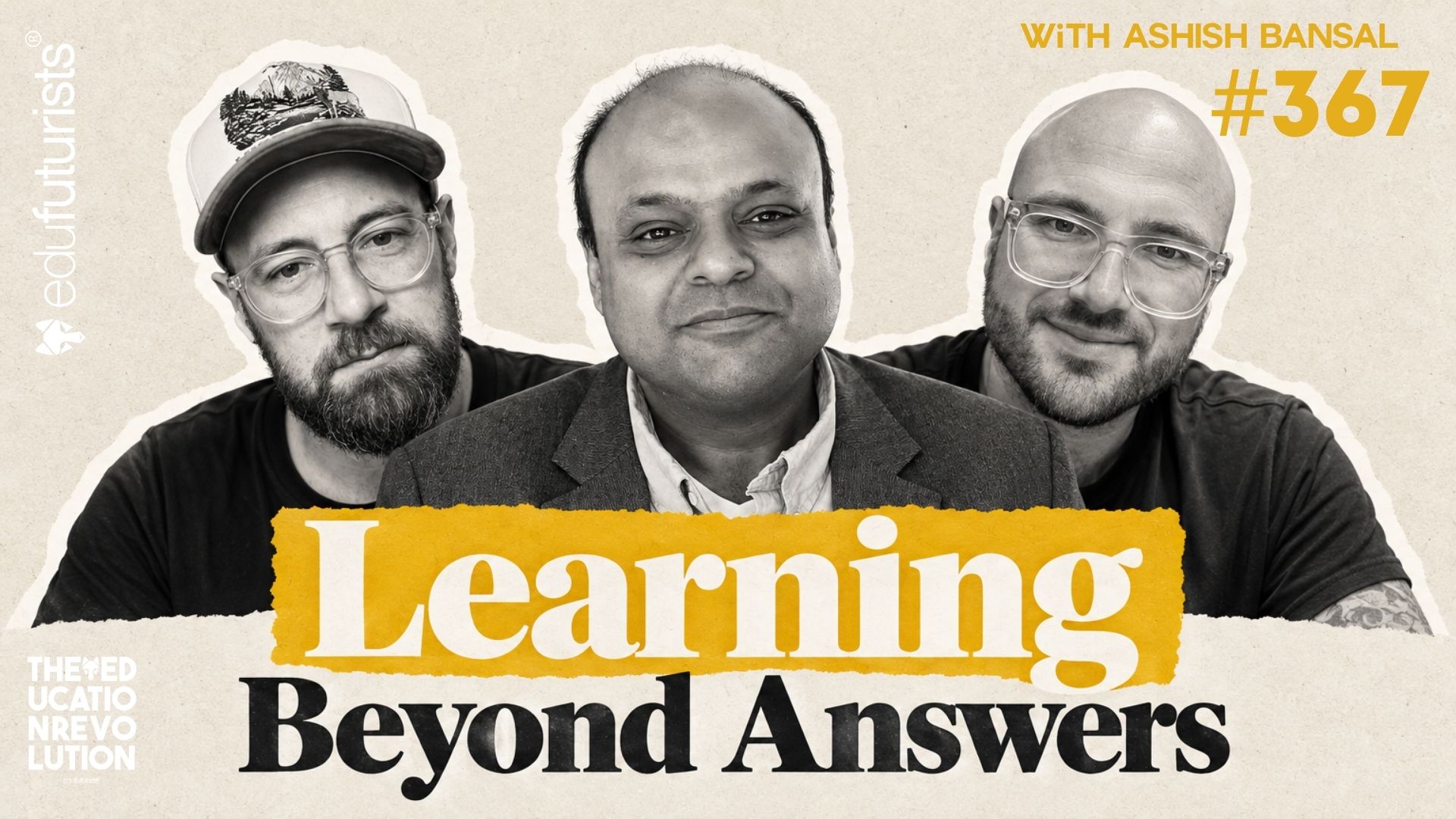
That's the question Ben Whitaker and Steve Hope put to me on the Edufuturists podcast, a UK show about the future of education. We spent about 50 minutes on what AI tutoring should look like when the goal is learning, not engagement. Here's the episode, plus the main ideas we covered.
Prefer to listen? Listen to episode #367 on Spotify.
A tool that can solve a math problem is not the same as a tool that can teach it. The same goes for people. A great mathematician doesn't automatically make a great teacher. Teaching means knowing what a student is ready for, what to ask next, and when to hold back.
That's why StarSpark refuses to be an answer machine. It uses Socratic questioning instead. It asks the student questions that move them one step closer, and they do the thinking. We also sequence question difficulty using Webb's Depth of Knowledge, so students build from recall to real reasoning instead of jumping straight to the hardest problems.
I shared a story about my son. He was taking an online algebra course that drew from a bank of seven questions. He figured that out and memorized them. That is not learning algebra.
Multiple choice makes this easy. Students can guess, or pattern-match, and look like they've mastered something they haven't. The fastest route to the right answer is not the same as learning.
In math, gaps compound. If a student moves on with 80% of a unit understood, the missing 20% doesn't stay small. It shows up again next unit, and again next year, and keeps getting bigger. Catching those gaps early is one of the most valuable things a tutor can do.
One-on-one tutoring works. That's the core of Bloom's two sigma problem: students who got one-on-one tutoring did far better than students taught in a regular class. The challenge has always been cost. Socrates taught one-on-one. So did the gurukuls in India. Our school systems are built around a cost model, with one teacher and a full room of students moving at the same pace.
AI can make personalized practice affordable for every student. But dropping AI into the old structure is a square peg in a round hole. A few ideas we talked about:
None of this replaces teachers. It gives every student more of their teacher's attention, where it matters most.
General-purpose chatbots are built for engagement. Learning tools need to be built for learning outcomes. Those are different goals, and they lead to different products.
A purpose-built tutor should be grounded in real textbooks, use computer algebra systems so the math is actually right, and avoid building emotional dependence. An AI tutor is not your child's friend, and it shouldn't try to be.
That doesn't mean it can't be fun. I told Ben and Steve about a student who got through 119 math problems in two days through a Star Wars role-play.
Thanks to Ben and Steve for a great conversation, and for asking the hard questions.
Want a tutor that asks questions instead of handing out answers? Try StarSpark.
Start learning with StarSpark today.
Free for 14 days, no credit card needed.